
Neoprene faced phenolic is not a different phenolic grade. It is a laminated phenolic core with a soft neoprene sealing layer bonded to both faces. The phenolic does the electrical work — 500 V/mil dielectric strength, 25,000 psi compressive — and the neoprene does the surface work. A rigid plain phenolic gasket sits on a rough or pitted flange face; the neoprene layer deforms into it at much lower bolt load. That is the entire point of this material family: sealing tolerance, not higher temperature or higher pressure. The neoprene face does not make the kit suitable above its temperature ceiling — it makes it suitable for imperfect flanges below it.
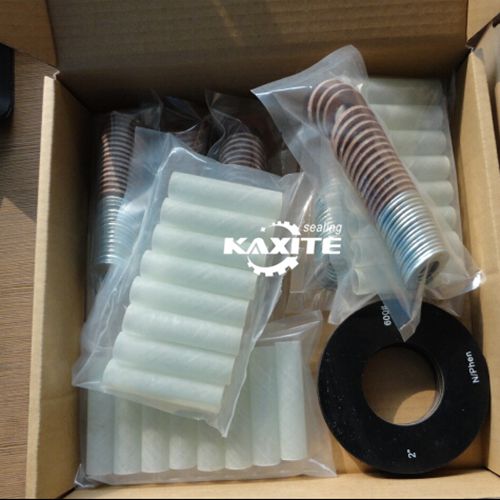
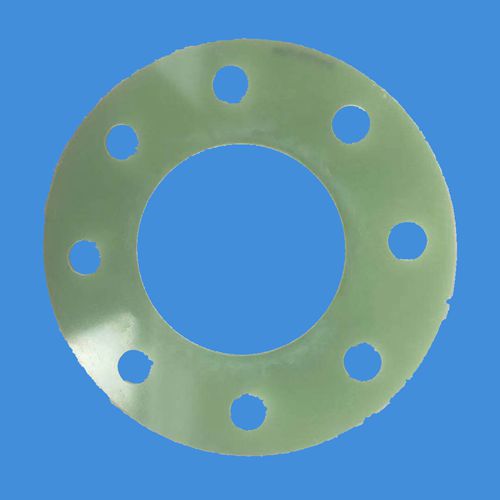
The Type E full-face central gasket, supplied as the gasket only. For maintenance, replacement, or when sleeves and washers are already in place.
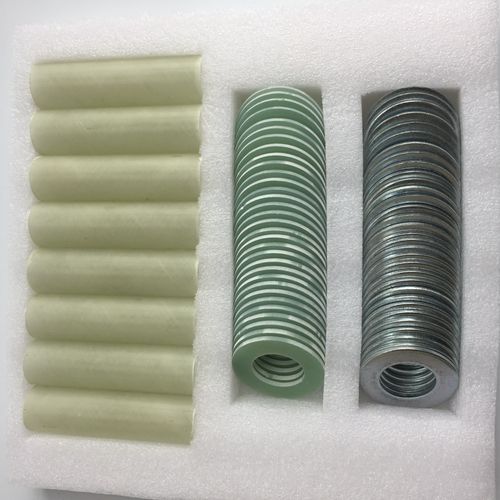
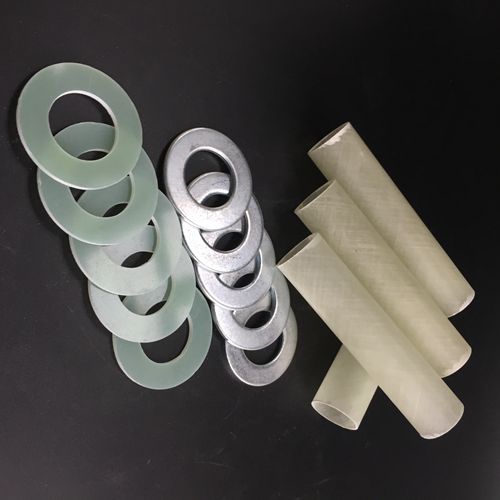
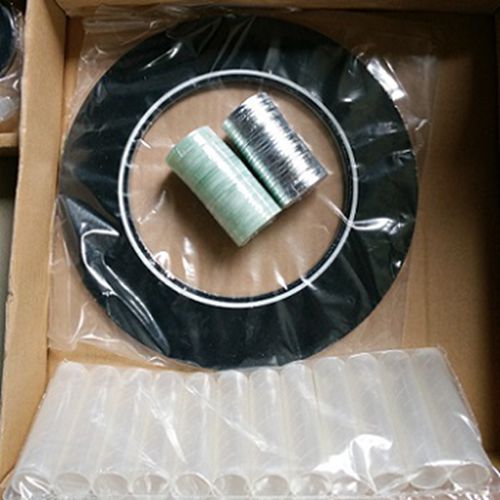
The full four-component dielectric barrier: central gasket, sleeves, washers and steel back-up washers. For new installations and full-kit replacements.
The neoprene face is the limiting factor. Below approximately +80°C, the soft face seals better than rigid phenolic on imperfect flanges. Above that temperature, the neoprene degrades — the correct answer is not a thicker neoprene faced kit, it is a plain phenolic kit (to +104°C) or a G10 kit (to +150°C). For higher-temperature requirements, see the Type E plain phenolic isolation kit page for the rigid alternative, or the VCS very critical service kit where pressure exceeds Class 300.
| Phenolic core dielectric strength | 500 V/mil |
|---|---|
| Phenolic core compressive strength | 25,000 psi |
| Sealing faces | Neoprene, factory-bonded to both sides of the phenolic core |
| Operating temperature | Approx. +79°C to +80°C, depending on variant; confirm at inquiry for exact duty |
| Pressure reference | ASME Class 300 standard |
| Flange dimensions | ASME B16.5 |
| Standard thickness | 1/8″ (3.2 mm) for flange-kit service |
| Variants | Type E plain central gasket; complete kit with Type E or Type F body |
For the matching G10 insulating washer as a standalone replacement, see G-10 glass epoxy washer. For the matching sleeve, see G10 insulation sleeves. For the full isolation kit family, see flange insulation gasket kits.
This is a family, not a single catalog SKU. To quote correctly, please state at inquiry:
1. Variant: Type E plain central gasket, or complete kit (sleeves + washers + steel back-up washers). 2. Flange facing: FF or RF. 3. Flange standard and size: ASME B16.5 nominal pipe size; or DN equivalent. 4. Pressure class: Class 150 / 300 typically; confirm if higher. 5. Service temperature: must be below the neoprene ceiling of approximately +80°C. 6. Quantity: MOQ 10 sets for the plain central gasket; 50 sets for the complete kit. 7. Destination market and any standard requirement (ASME B16.5 reference, cathodic protection specification, etc.).
For standard configurations, lead time is 7–15 days. Custom sizes and OEM packaging are quoted separately with confirmed timing.
Send your variant requirement, flange size, pressure class, facing type and service temperature. Engineering team confirms the correct neoprene faced configuration and returns quotation with lead time.
Request Neoprene Faced Kit QuotationThe KXT 1002 is a Type E full-face isolation kit for cathodic protection, with one material change: the phenolic core carries factory-bonded neoprene faces on both sides. The neoprene provides a soft, conformable sealing surface that closes minor flange imperfections and surface roughness that a rigid plain phenolic gasket cannot bridge. The phenolic core maintains 500 V/mil dielectric strength and 25,000 psi compressive strength. Dimensions to ASME B16.5. The trade-off is temperature: neoprene limits continuous service to approximately +80°C, versus +104°C for plain phenolic. ISO 9001; MOQ 10 sets, 7–15 day lead time.

A complete flange insulation kit, not just a gasket. Kaxite supplies the neoprene faced phenolic central gasket together with insulating sleeves, insulating washers and steel back-up washers — the full dielectric barrier that stops cathodic protection current from bridging the flange. The phenolic carrier provides 500 V/mil dielectric strength and 25,000 psi compressive strength; the neoprene faces seal at low bolt load. Temperature range −54°C to +79°C, pressure up to ASME Class 300. Type E full-face and Type F raised-face configurations to ASME B16.5. ISO 9001; MOQ 50 sets, 7–15 day lead time.