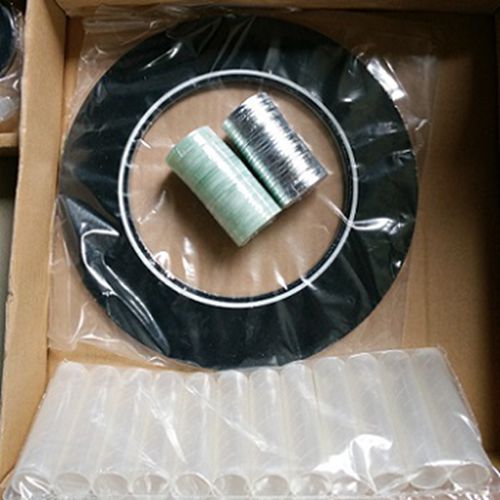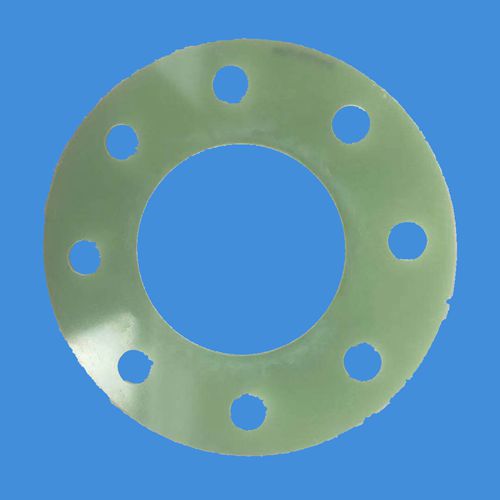


Neoprene faced phenolic. Seals the fluid and provides the primary dielectric barrier between flange faces.
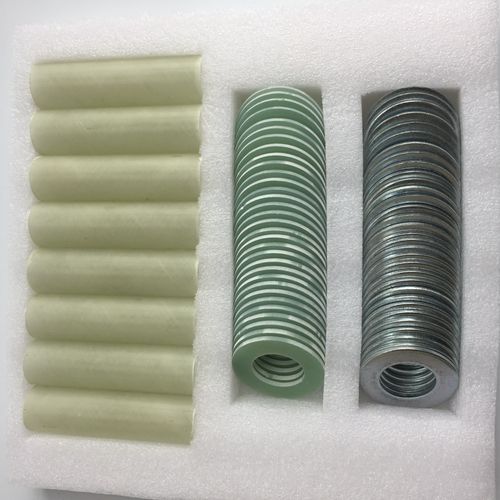
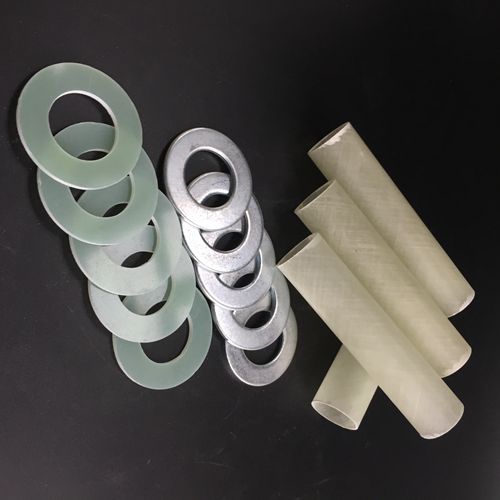
Fit over stud bolts. Prevent the bolt from touching the flange bolt hole — the most common short-circuit path.
Under nuts and bolt heads. Isolate the bolting from the flange faces.
Distribute bolt load. Prevent the insulating washers from being crushed under torque.
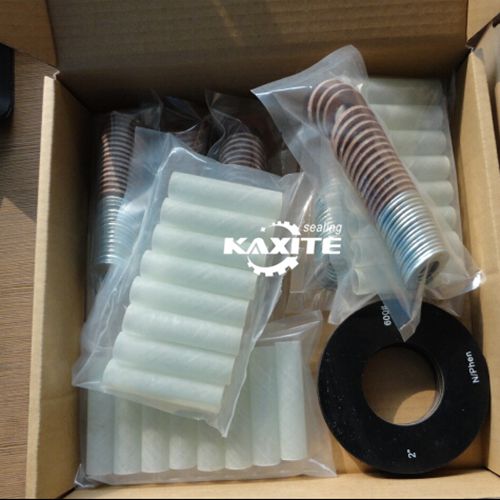
The most common field failure is not the gasket itself — it is a missing or damaged insulating sleeve, or a steel washer placed directly against the flange because the insulating washer was omitted. That single contact point shorts out the entire isolation kit. Kaxite supplies the kit as a matched set rather than selling the central gasket alone. This is the difference between a kit and a gasket.
| Material | Dielectric (V/mil) | Compressive (psi) | Max Temp (°C) | Water Absorption (%) | Best For | Avoid When |
|---|---|---|---|---|---|---|
| Neoprene Faced Phenolic (this page) | 500 | 25,000 | +79 | 1.6 | Standard oil & gas flanges, cost-sensitive projects, sealing performance priority | Service above 79°C, aggressive solvents |
| Plain Phenolic | 500 | 25,000 | +104 | 1.6 | Slightly higher temperature than neoprene faced, but no soft sealing layer | Rough or pitted flange faces |
| G-10 Epoxy Glass | 550 | 50,000 | +138 | 0.10 | High temperature, high bolt load, stricter electrical performance | Cost-sensitive standard service |
The trade-off is straightforward. Neoprene faced phenolic gives you a soft, conformable sealing face and the lowest cost of the three — at the price of a 79°C temperature ceiling and higher water absorption. G-10 gives you higher temperature, higher compressive strength and lower water absorption — at a higher material cost. If the flange is flat, the service is within the neoprene temperature range, and sealing integrity matters more than the last few degrees of thermal margin, neoprene faced phenolic is the correct specification. If the service runs hot or the flange is rough, see G10 insulation sleeves and G-10 glass epoxy washers for a higher-temperature kit configuration.
| Flange Facing | Kit Type | Gasket OD | Bolt Holes | Installation Note |
|---|---|---|---|---|
| Full-face (flat face) | Type E | Same as flange OD | Precision-cut | Covers the entire flange face. Prevents external conductive debris from bridging the flange. |
| Raised-face | Type F | Slightly less than bolt circle ID | None | “Drop-in” installation without full flange separation. Wrap the flange OD to prevent foreign material from shorting the exposed faces. |
| Dielectric strength | 500 V/mil |
|---|---|
| Compressive strength | 25,000 psi |
| Water absorption | 1.6% |
| Insulating resistance | 40,000 Meg Ohms |
| Flexural strength | 22,500 psi |
| Operating temperature | −54°C to +79°C (−65°F to +175°F) |
| Pressure rating | Up to ASME Class 300 / PN40 (≈50 bar) |
| Flange standards | ASME B16.5, ASME B16.47, API 6A, DIN, BS, JIS |
For higher-pressure or higher-temperature isolation, see the VCS flange insulation gasket kit. For a plain phenolic carrier without the neoprene sealing face, see the Neoprene faced plain phenolic kit.
Kaxite operates an ISO 9001 certified quality system. Every kit is supplied with mill test reports (MTR), material certificates and dimensional inspection records. Dielectric strength is verified on the central gasket before shipment. Third-party inspection (SGS, BV, Intertek) can be coordinated. The full insulation kit range is listed at flange insulation gasket kits.
Standard MOQ is 50 sets; lead time 7–15 days. Custom flange sizes, non-standard pressure classes and private label packaging are quoted at inquiry. Kits are supplied to ASME B16.5 dimensions as standard, with API 6A and DIN options on request.
Send your flange size, pressure class, gasket type (E or F) and service temperature. Engineering team confirms the kit configuration, MOQ and lead time.
Request Kit Quotation